The best wall color for a kitchen is the one that supports your cabinetry - helping the room feel cohesive, comfortable, and intentional.
Paint seems simple until you are choosing it next to cabinets, flooring, counters, and lighting. A kitchen has many fixed elements, so wall color works best when it is selected as part of a complete palette, not as an afterthought.
Here is a practical way to narrow your options.
Start with a few quick questions
Before you look at paint samples, write down your answers to these:
- Does your kitchen get lots of natural light, some light, or minimal light?
- Do you want the space to feel brighter and airier, or warmer and moodier?
- Do you want your kitchen cabinets to blend in, or stand out as the focal point?
- Are your cabinets light, medium, or dark in tone?
These answers will quickly guide you toward the right direction.
Small kitchens - keep the palette visually open
In smaller kitchens, lighter wall colors often help the room feel more spacious. Mid-range contrast can create hard visual boundaries that make the space feel tighter. A softer, related tone usually feels calmer and more open.
If your cabinets are already very light, consider a slightly different light tone on the walls so the room does not feel flat. The goal is gentle separation, not a dramatic split.
Large kitchens - more freedom, but still aim for cohesion
Larger kitchens can handle more color because the room has space for depth. If your kitchen connects to other rooms, it helps when the wall color relates to nearby spaces so the home feels consistent.
In a standalone kitchen with strong lighting, you can also lean into richer hues if that matches your style.
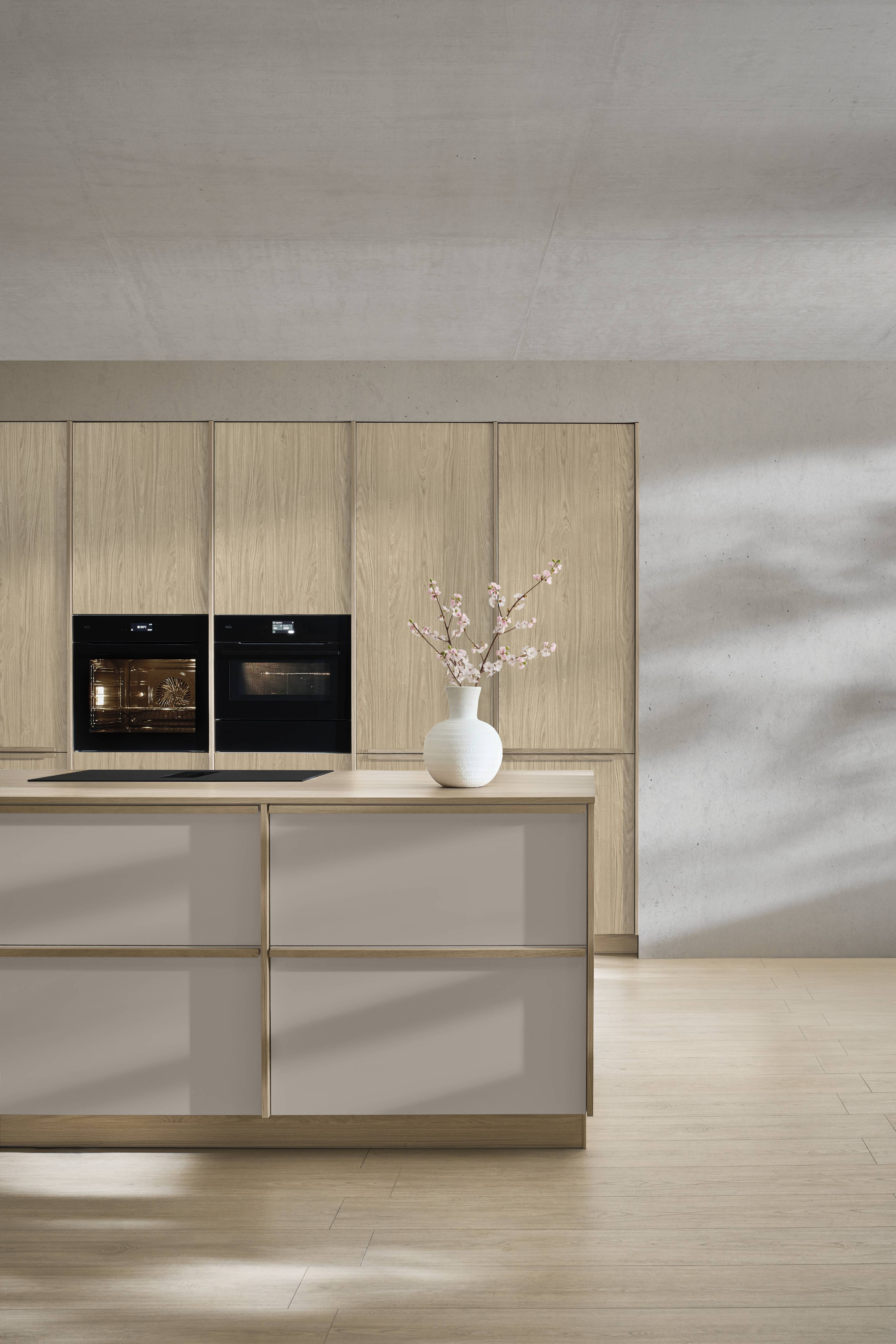
Working with wood tones
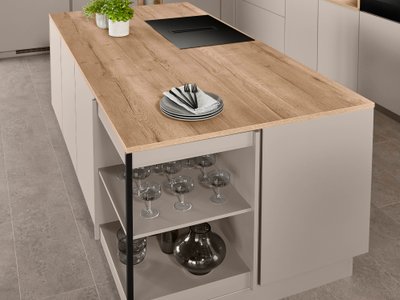
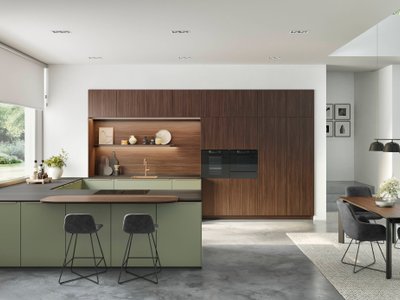
Wood tones often bring natural warmth. If you want that warmth to stand out, a cooler wall color can create subtle contrast. If you want the kitchen to feel softer and more blended, warm neutrals can support the cabinetry and create a relaxed, inviting mood.
Working with white cabinets
White cabinets are versatile, but wall color determines whether the space feels crisp or cozy. Softer neutrals can make the room feel warm, while cooler light tones can make the space feel fresh and modern.
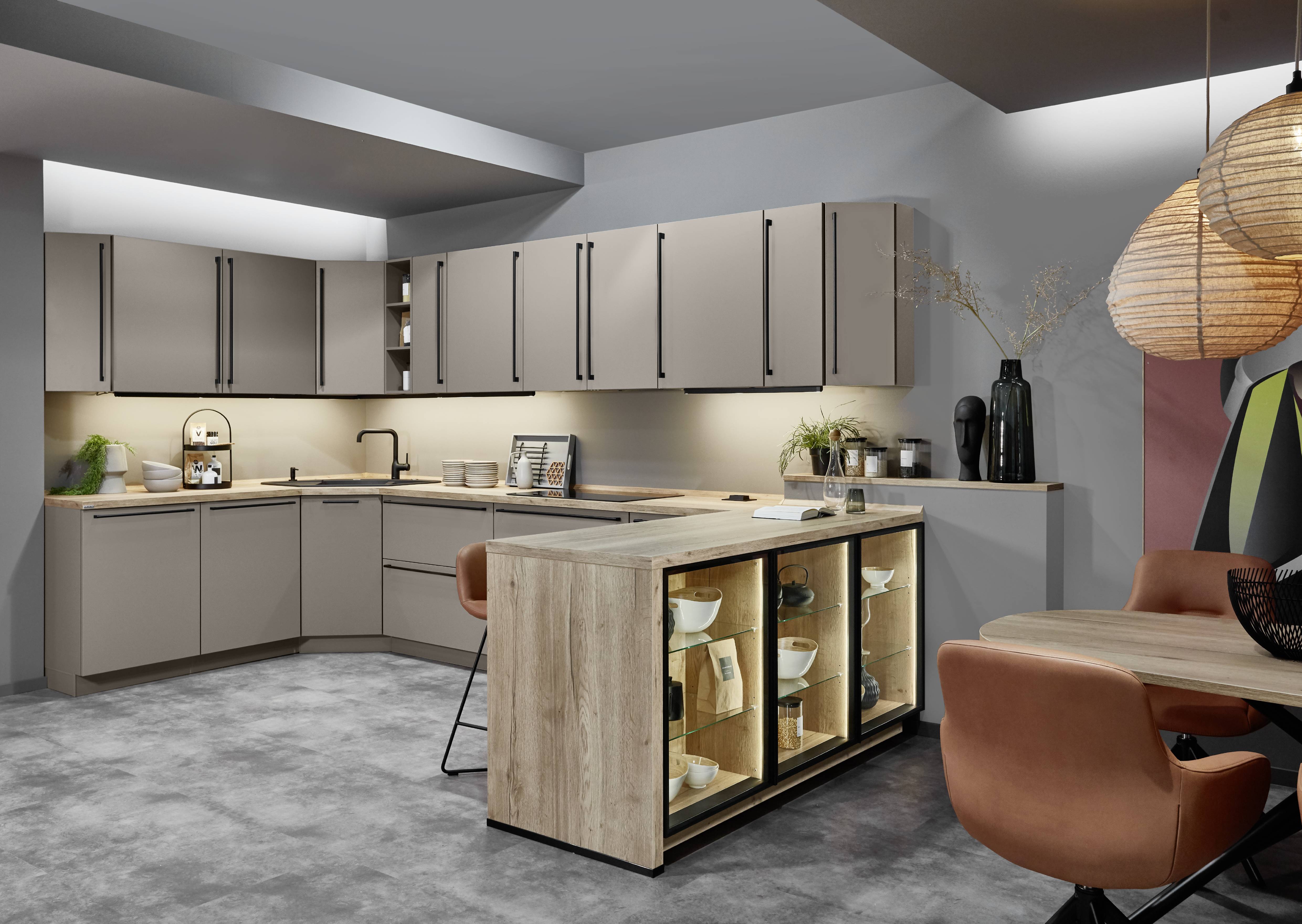
Working with dark cabinets
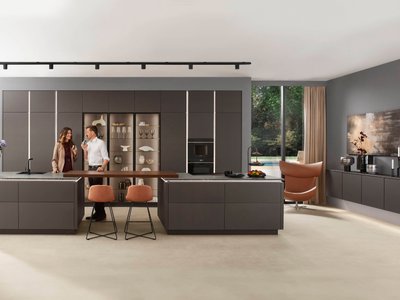
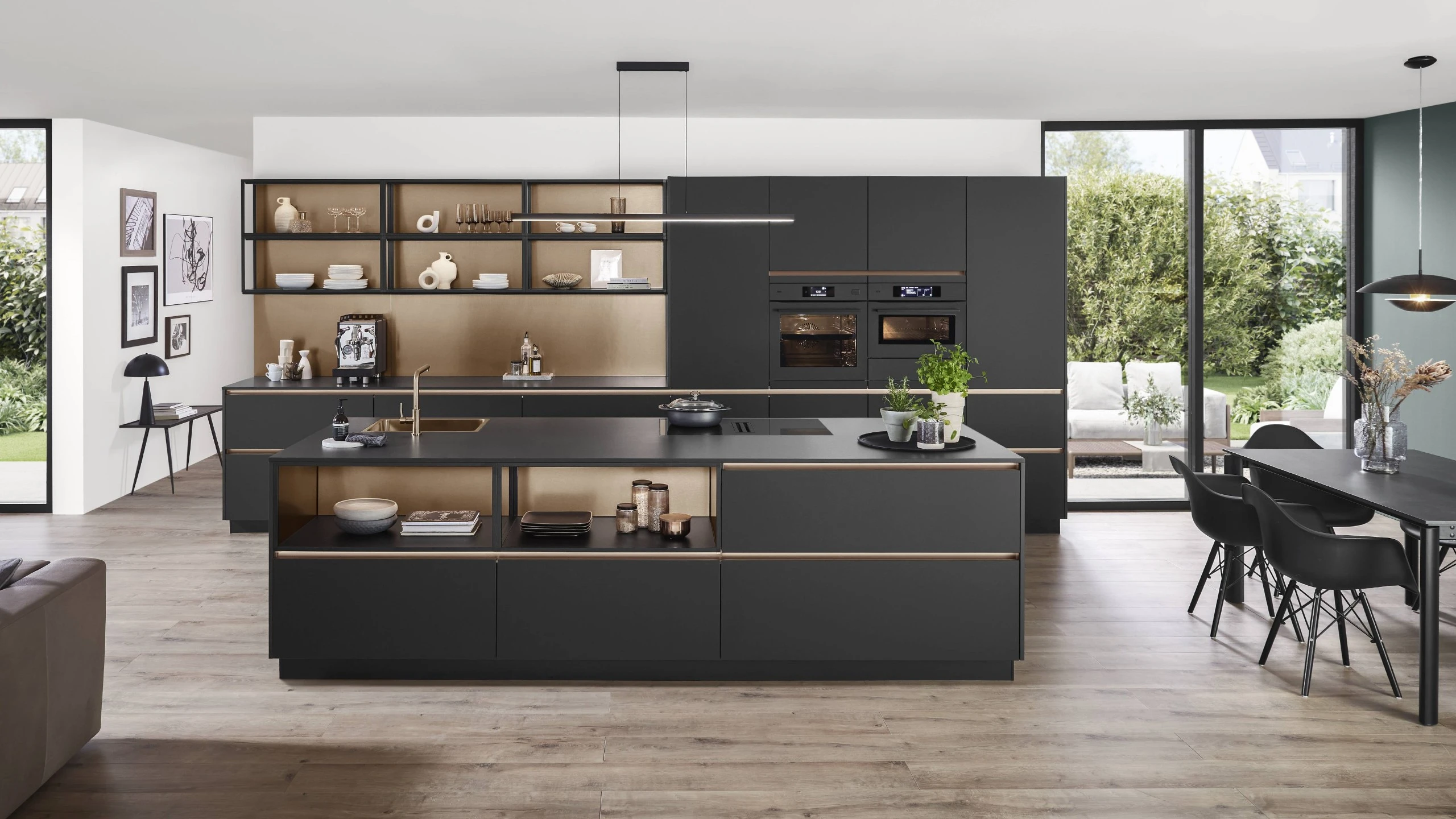
Dark cabinetry can look striking and high-end, especially in a well-lit space. If you want to brighten the kitchen, lighter wall colors increase contrast and keep the room from feeling heavy. If you prefer a moodier look, deeper wall colors can work well when balanced with strong lighting and lighter surrounding elements.
When in doubt, design the whole palette first
Most paint regret comes from choosing wall color in isolation. A well-designed kitchen considers how walls, cabinets, counters, floors, and lighting work together as one system. That is why it helps to plan cabinetry and color direction together, instead of trying to fix the palette later.
If you want to understand the design approach behind our kitchen collections, you can start here: a European approach to modern living. If you would like to see finishes in real light, you can find a location here: showrooms across the U.S.. For real-world inspiration, explore: completed kitchen projects.
Want help choosing a wall color that truly works?
If you are planning a remodel and want a cohesive color palette that complements your custom kitchen cabinets, book a free consultation or contact us with questions here: https://noblessa-usa.com/contact/